Is a car with 100,000 miles worth buying?
High mileage isn’t a problem on its own. How it was driven and looked after matters more. What to check.
Miles aren’t the whole story
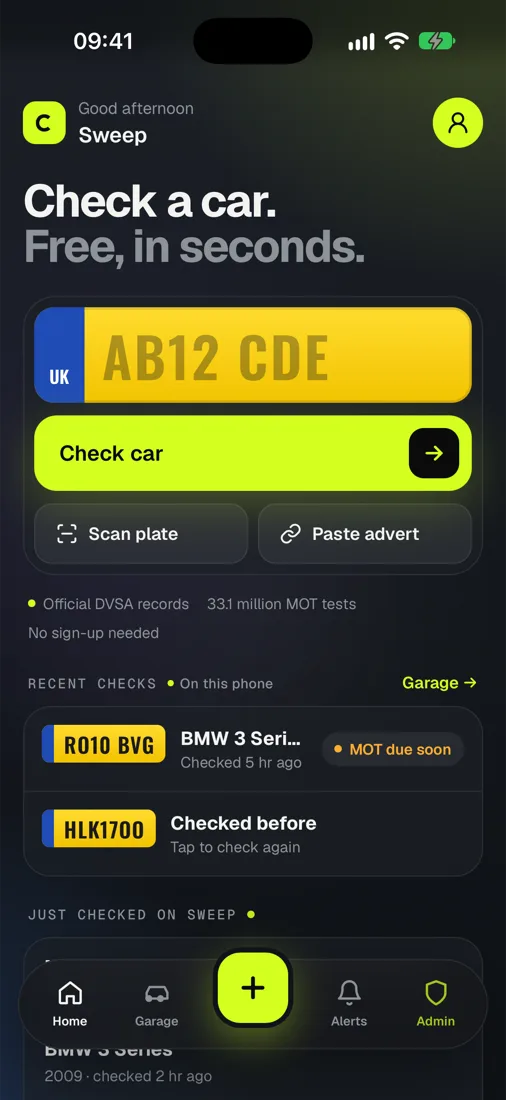
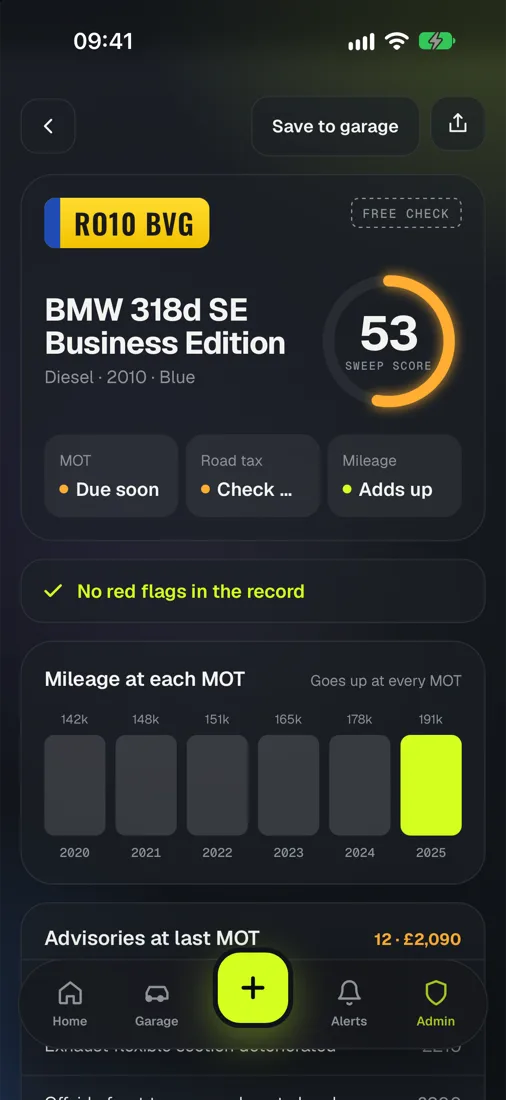
A car that did 100,000 miles on the motorway has had an easier life than one that did 50,000 in town, stopping and starting every few hundred yards. Ask how it was used, and look at the MOT history: steady, high yearly mileage usually means long journeys.
- Full service history
- Timing belt done on time
- Steady mileage at every MOT
- Few repeat advisories
- Gaps in the history
- The same advisory, test after test
- Smoke, knocks or warning lights
- Priced like a low-mileage car
What wears with miles
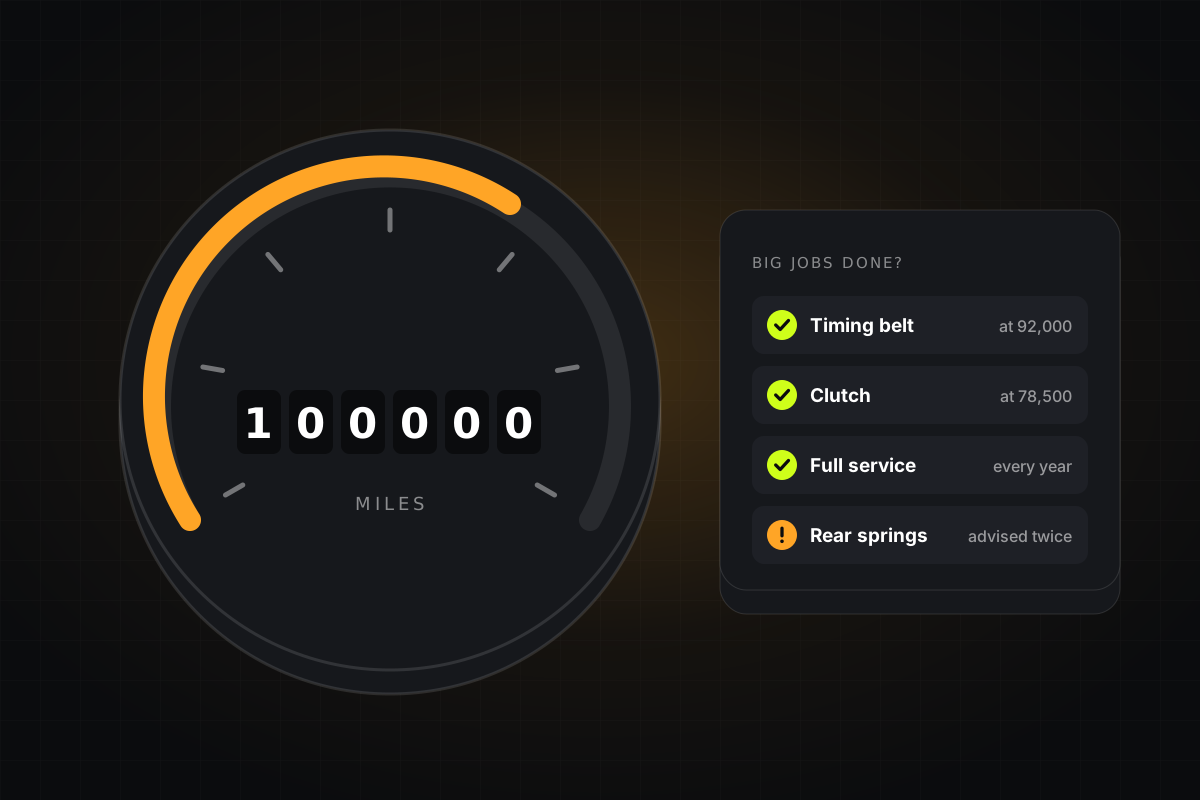
Clutches, suspension parts, wheel bearings and the timing belt all have a life. On diesels, the turbo and the diesel particulate filter (DPF) can be expensive, and a DPF suits long runs better than short ones. Check which of these have been replaced.
- Clutch
- Timing belt
- Suspension bushes
- Turbo
- DPF
- Injectors
History matters more
At this mileage the service record is the best guide to what’s left in the car. Regular oil changes and the big jobs done on time are worth more than a low price.
Read the MOT advisories
The free MOT history shows what the testers found each year. An advisory that keeps coming back, like corrosion or a worn suspension part, is a repair the owner has been putting off, and it will be yours to pay for.
Price it for the miles
High-mileage cars are cheaper for a reason. Compare it with the same model at a similar mileage, not with low-mileage ones, and leave money aside for the jobs that are due.