How rare is my car?
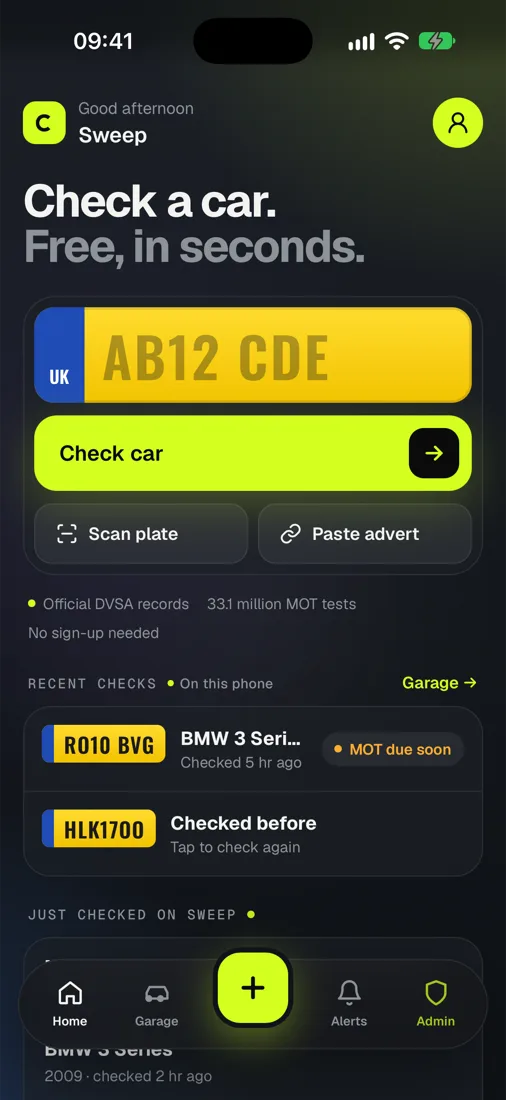
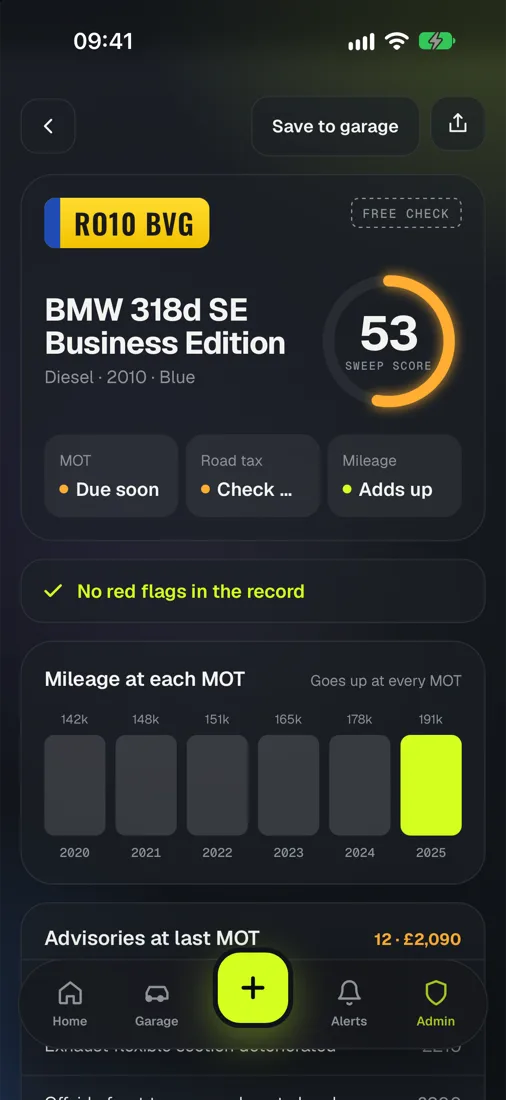
Enter the registration to see how many of the same model and year are still on UK records, how many are on the road and how many are declared off it. In beta: the counts are by model, and by version where we can tell which one it is.
Where the numbers come from
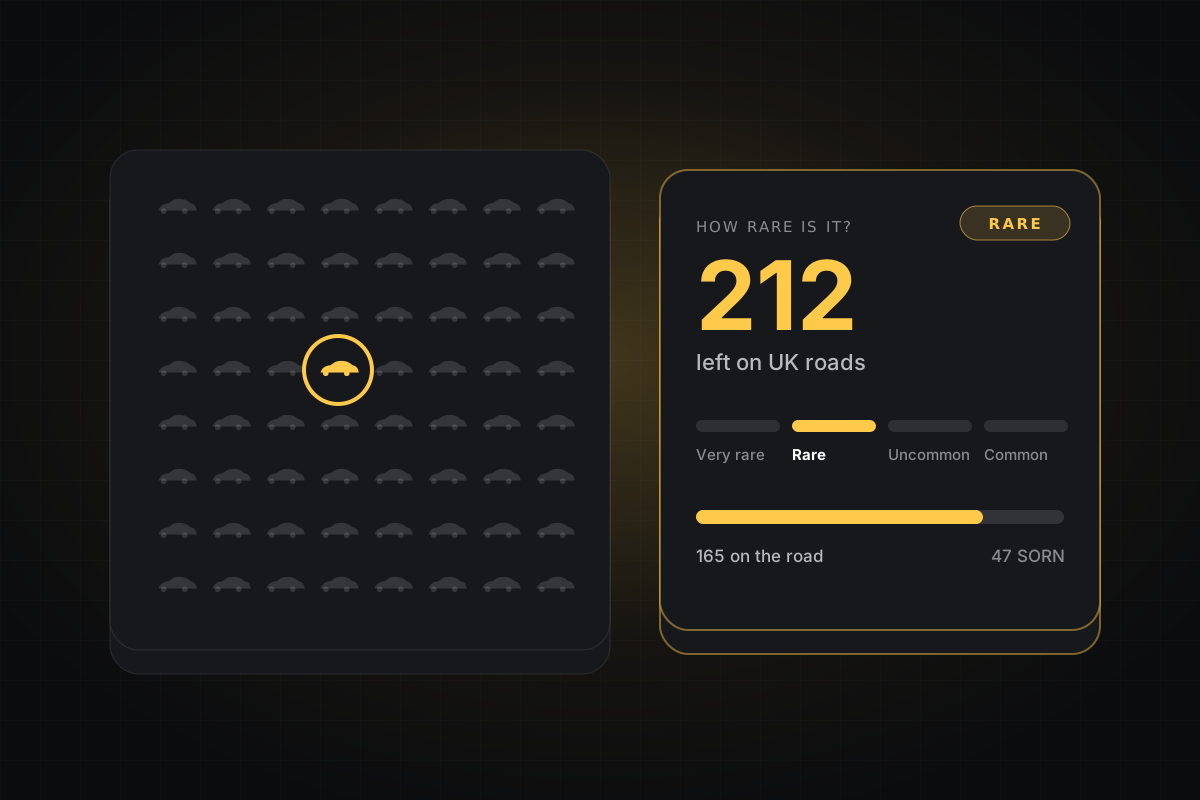
The Department for Transport publishes how many of every make and model are licensed (taxed or exempt) and SORN (declared off the road), by the year each was first registered. Sweep matches the car to those figures, the same ones the DVLA keeps.
What counts as rare
Up to 100 left is very rare, up to 1,000 rare and up to 10,000 uncommon. Anything above that is a common sight. Performance versions are counted on their own where the engine size gives them away, so an M5 isn’t lost among every 5 Series.
Imports and classics
Imported cars are often recorded under the year they were first registered in the UK, so a single year can look rarer than the model really is. Sweep shows the count for every year too, so you can see both.
Rare cars need a proper check
Rare and classic cars are worth more, and that makes them targets for clocking, cloning and hidden finance. Before you buy, run the free MOT check for the mileage trail, then a full history report for finance, write-offs and theft.
Questions
Is a SORN car still counted?
Yes. SORN cars are still registered with the DVLA, just declared off the road. Sweep shows them separately, so you can see how many are actually being driven.
Why is my car shown as rarer than I expected?
Usually because the DfT counts by the year a car was first registered, and imports are often registered years after they were built. The every-year count shows the whole model.
How up to date are the figures?
They’re the DfT’s latest published vehicle licensing statistics, updated each year.
Does a rare car cost more to insure or fix?
Often, yes: parts can be harder to find and insurers may want a specialist policy. The free check estimates repair and running costs for the car too.