How to spot a cloned car
A cloned car wears the plates of a legal twin to hide that it’s stolen. The checks that catch one.
What cloning is
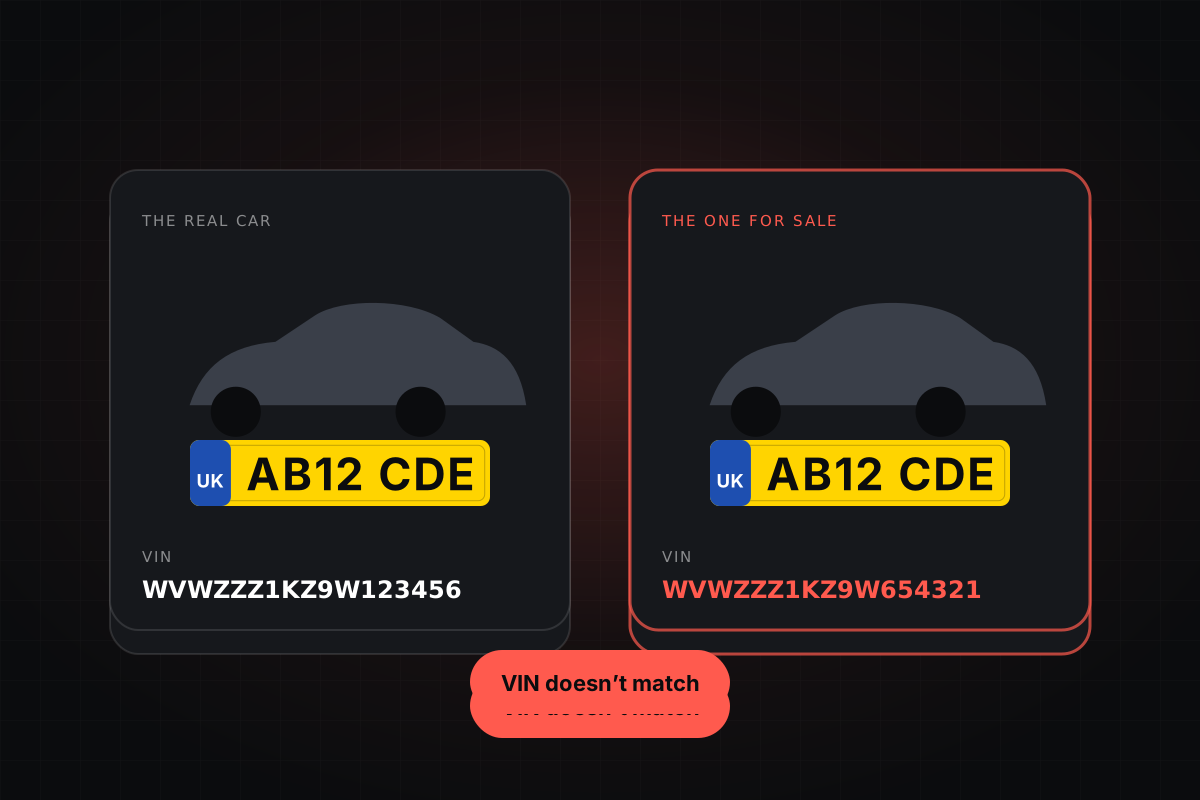
Criminals take a stolen car and put on number plates copied from a legal car of the same make, model and colour. Checks on the plate come back clean because they’re checking the other car. If you buy a clone, the police can take it back and you lose your money.
- The plateCopied from a real car
- The recordMake, model and colour on file
- The VINOn the car, not just the logbook
Check the record matches
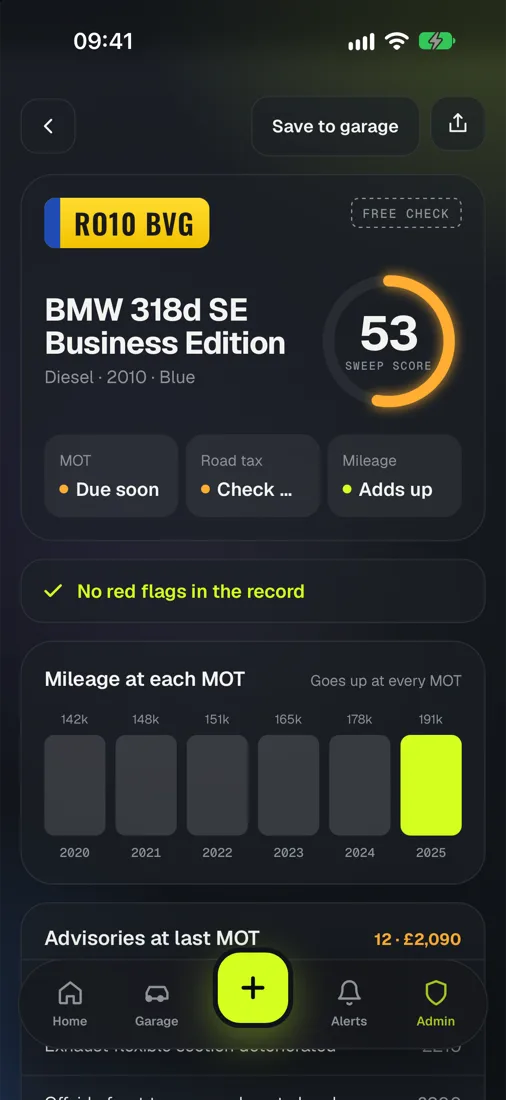
A free check shows the make, model, colour, engine size and first registration date on record for the plate. If any of them don’t match the car in front of you, stop there.
Find the VIN on the car
The 17-character VIN is usually at the base of the windscreen and on a door pillar, and often under the bonnet too. It should be the same in every place and match the logbook. Scratched, covered or tampered numbers are a warning sign.
- Base of the windscreen
- Door pillar
- Under the bonnet
- The V5C logbook
- Service records
- Your full check
Look at the paperwork and the seller
The logbook should have a DVLA watermark and match the seller’s ID and address. Be wary of a seller who wants to meet somewhere other than their home, can’t show the logbook, or is selling well below the going price.
Read the MOT history
MOT tests in a part of the country the seller has never lived in, or mileages that don’t follow on, can mean the history belongs to another car.
If you think it’s a clone
Don’t buy it and don’t pay a deposit. Call the police on 101 with the registration and where it’s being sold.