Free vs paid car checks: what each one shows
A free check covers the MOT record. A paid check covers finance, theft and write-offs. When each is enough, and when to pay.
Where the free data comes from
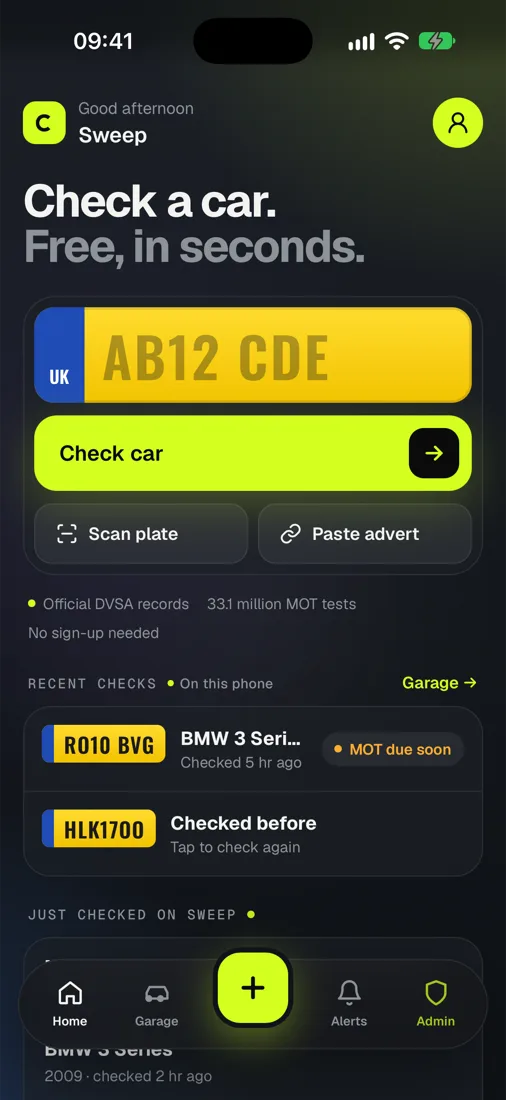
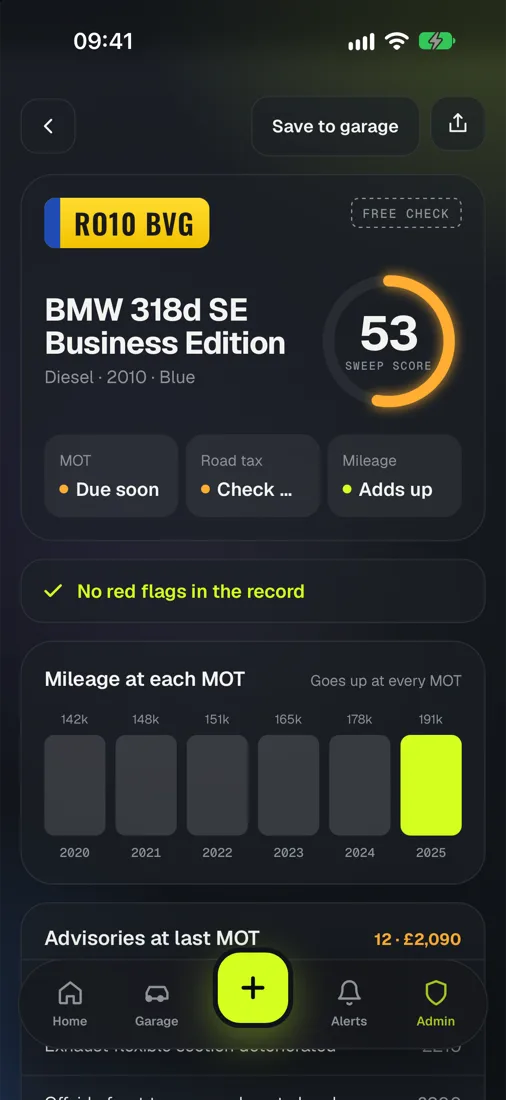
The DVSA publishes every MOT test since 2005: the date, the result, the mileage and each advisory and defect. The DVLA publishes a car’s tax and MOT status, its make, colour and engine, and safety recalls are public too. Anyone can look these up free on GOV.UK with just the registration. Sweep uses the same official records and adds plain-English explanations, the mileage trail and a score.
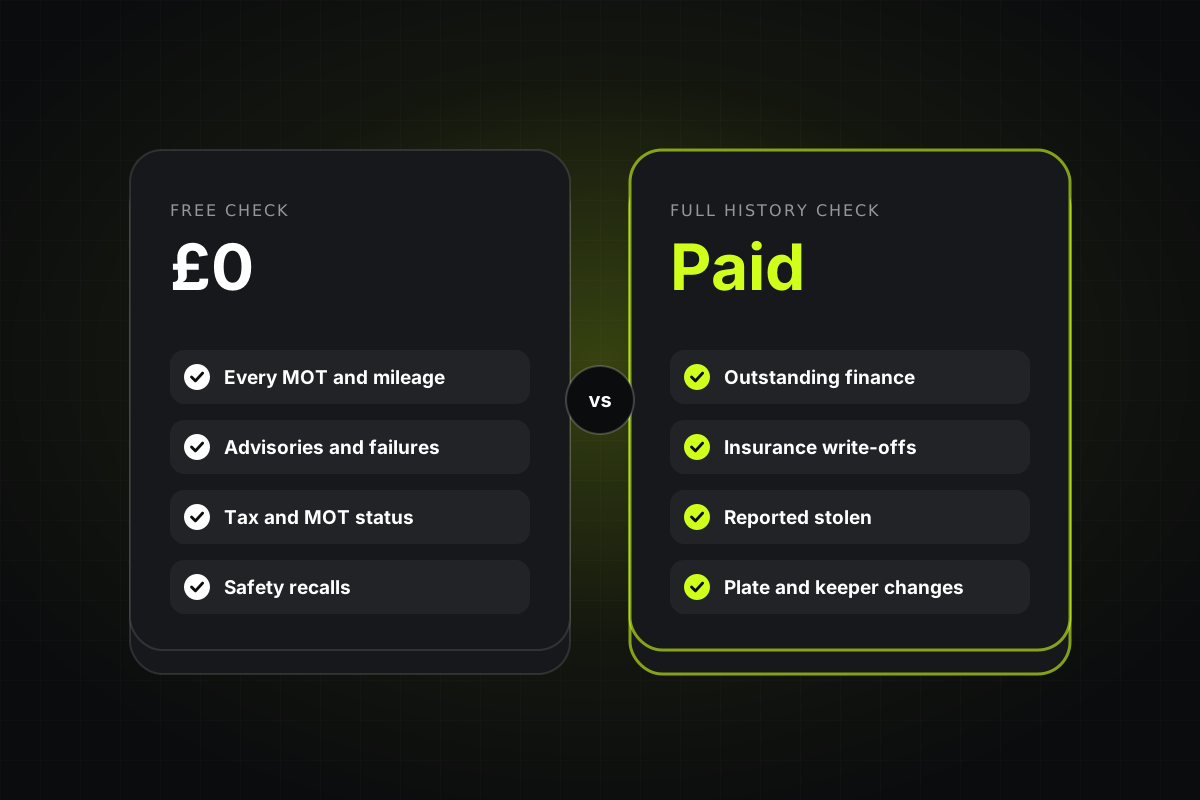
- Every MOT, with mileage
- Advisories and failures
- Tax and MOT status
- Make, model, colour and engine
- Safety recalls for the model
- Outstanding finance
- Insurance write-offs
- Reported stolen
- Plate and keeper changes
- Imports, exports and scrapping
What a free check is good for
Most of the questions about how a car has been looked after: whether the mileage adds up, what keeps failing, what the last tester warned about and roughly what that will cost. It’s the best way to narrow a shortlist, because you can check as many cars as you like and walk away from the bad ones before you travel.
What only a paid check can see
Finance companies, insurers and the police don’t publish their records. A paid history check searches them for outstanding finance, insurance write-offs, theft reports, plate changes, the number of previous keepers, and whether the car has been imported, exported or scrapped. None of that is in the MOT record, and a car can have a spotless MOT history and still be on finance or an insurance write-off.
Why outstanding finance matters
If a car still has money owed on a hire purchase or PCP deal, it belongs to the finance company until that’s paid. The law gives some protection to private buyers who didn’t know, but proving it is slow and stressful, and the car can be taken while it’s sorted out. A paid check before you pay is far easier.
When to pay for one
Use the free check on every car you look at. Pay for a full check once you’re serious about one particular car, before you hand over any money, and especially in a private sale, where you have fewer rights than buying from a dealer. Full checks usually cost from a few pounds to about £20, which is small next to the price of the car.
- ShortlistFree check on every car
- ViewingLogbook, VIN, test drive
- Ready to buyFull check before you pay
What neither check can tell you
Records show a car’s past, not how it drives today. Look at it in daylight, check the logbook (V5C) matches the seller and the car, take a test drive and, for anything expensive, pay for an independent inspection.