How to work out what a used car is worth
Compare like with like, then adjust for mileage, history and condition. How to tell a fair price from a bad one.
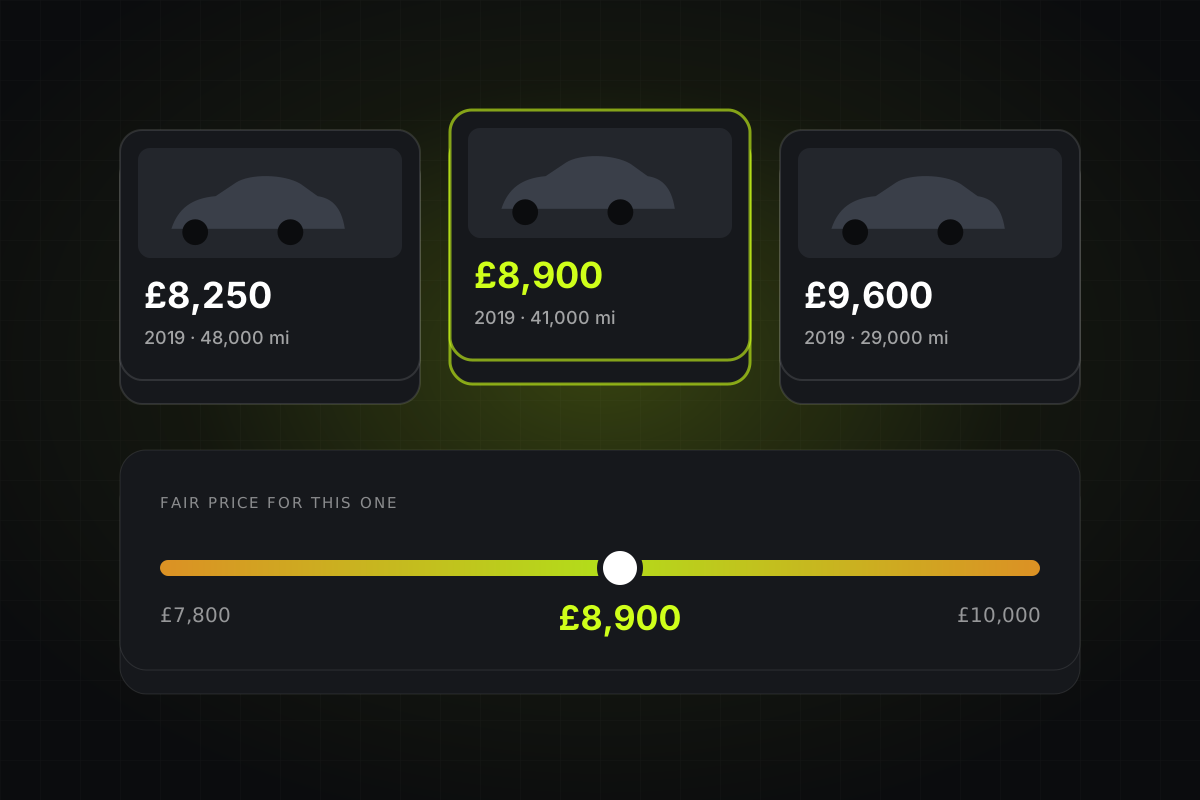
Start with similar adverts
Look for cars of the same model, year, engine and trim, with similar mileage. Ten or so give you a range. Dealer cars are usually priced higher than private ones, because the dealer prepares the car and gives you legal rights.
- Find similar carsSame model, age and engine
- Match the mileageLower miles cost more
- Adjust for historyService book, owners, MOT
- Allow for faultsTake repairs off the price
Mileage changes the price
Lower mileage is worth paying for, but only if it’s genuine. A car with unusually low miles for its age should have the MOT history to prove it.
History adds value
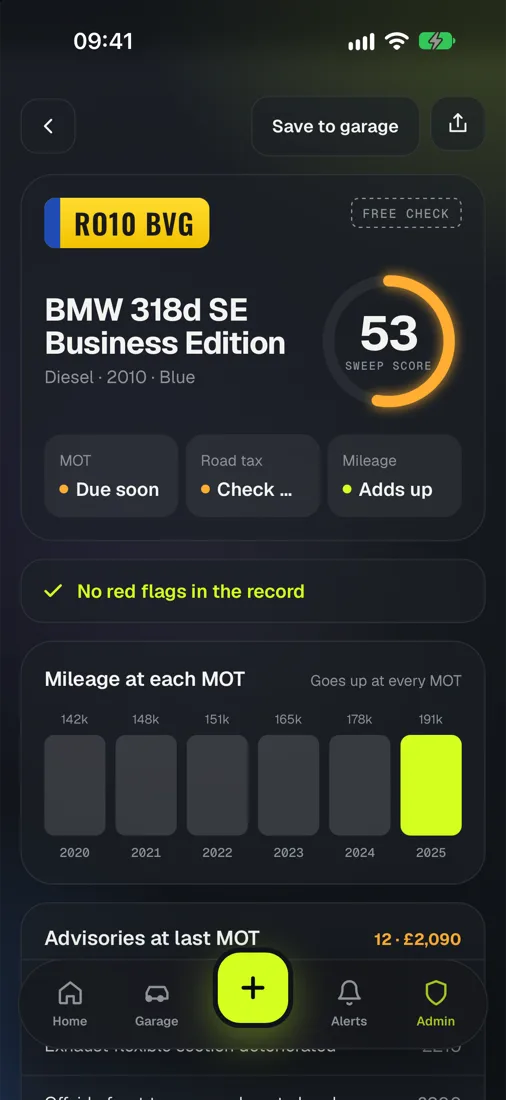
A full service history, fewer owners and a long MOT all make a car worth more. Gaps in the history, or a long list of advisories at the last MOT, are reasons to pay less.
Take repairs off the price
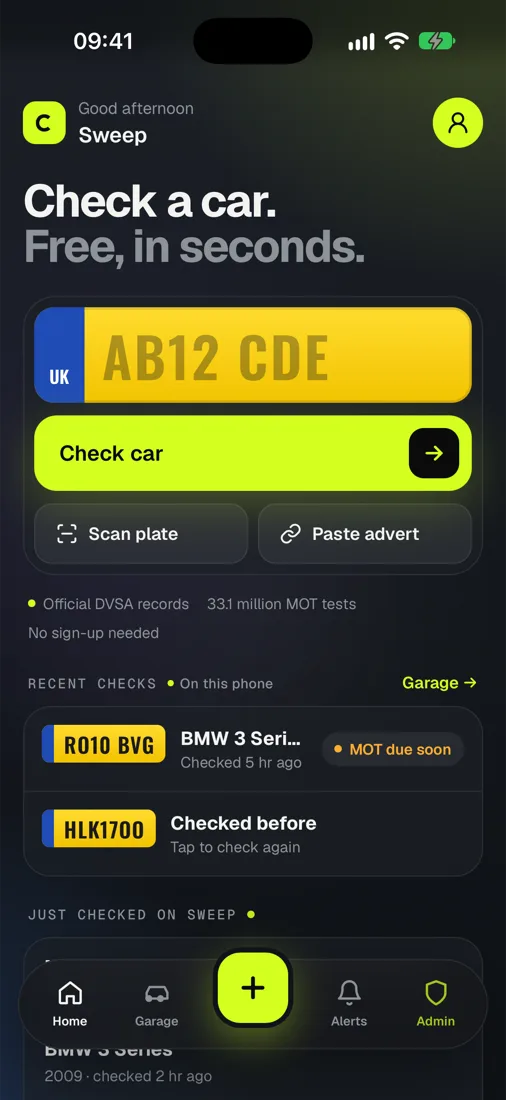
Work out what the car will need soon, from its advisories, tyres and service due, and take that off what you’d pay for a perfect one. Sweep’s free check estimates what the last MOT’s advisories will cost.
- Write-off or financeWorth far less, or not yours.
- MileageCompare like with like.
- History and ownersFull history adds value.
- Repairs dueTake them off the price.
Check it isn’t too cheap
A price well below every similar car is a warning. It can mean a hidden write-off, finance still owed or a scam advert. A full history check covers all three, with data provided by Experian.