Private plates and plate changes: what they mean
A plate change on a car’s record is usually harmless. Here is how to tell, and how to check the car under its old plate.
Why plates change
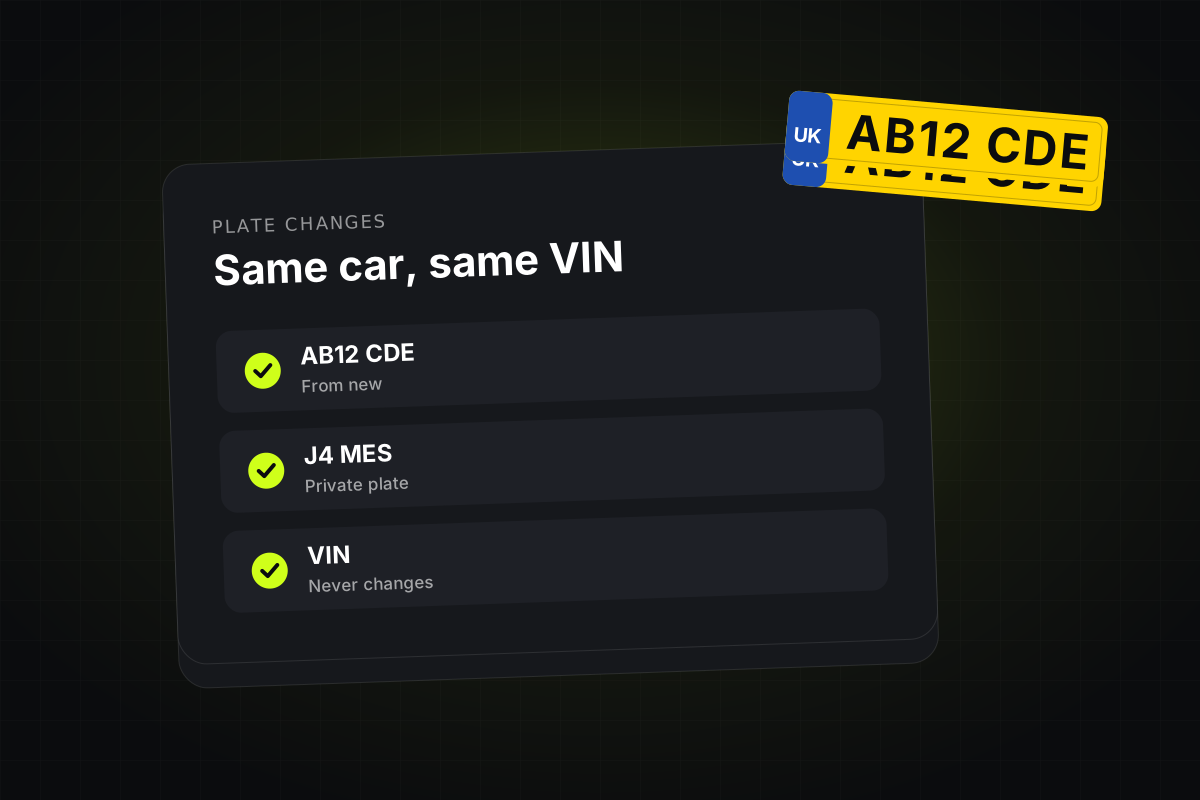
Most plate changes are a private (personalised) plate being put on or taken off. Owners move a cherished plate from car to car, and when they sell, the car usually goes back to its original registration or is given an age-related one. The DVLA records every change.
- Original plateOn the car from new
- Private platePut on by an owner, recorded by the DVLA
- Same VIN throughoutOne history, whatever the plate says
The history follows the car
A car’s identity is its VIN, the 17-character number stamped into the body, not its plate. MOT tests, mileage readings and insurance records stay with the vehicle when the plate changes, so a check under the current plate still shows the whole record.
When a change is worth a second look
A plate change straight after a write-off, a theft marker or a big drop in recorded mileage is worth asking about: a new plate can make an old problem harder to find for a buyer who only searches the plate they can see. A full history check lists previous plates, so you can search those too.
- Owner’s private plate, years agoOrdinary. Nothing to worry about.
- Changed just before saleUsually the seller keeping their plate.
- Changed after a write-offSearch the old plate too.
- VIN doesn’t match the recordNot a plate change: walk away.
A plate that hides the car’s age
It’s illegal to put on a plate that makes a car look newer than it is, but a dateless or older-style plate is allowed, so the plate alone can’t tell you a car’s age. The date of first registration on the V5C, and on Sweep’s check, does.
Q plates
A registration starting with Q means the DVLA couldn’t confirm the vehicle’s age or identity: a kit car, a heavily rebuilt car or some imports. Q-plate cars can be harder to insure and are worth less. Buy one only if you know exactly what it is.
Changed plates aren’t cloned plates
A plate change is official and on the record. A cloned car wears a copy of another car’s plate to hide what it really is. The check is the same for both: match the VIN on the car to the V5C and to the history check.