The most common MOT failures, and how to avoid them
Lights, tyres, brakes and wipers fail more cars than anything else. Most take minutes to check before the test.
Lights and signals
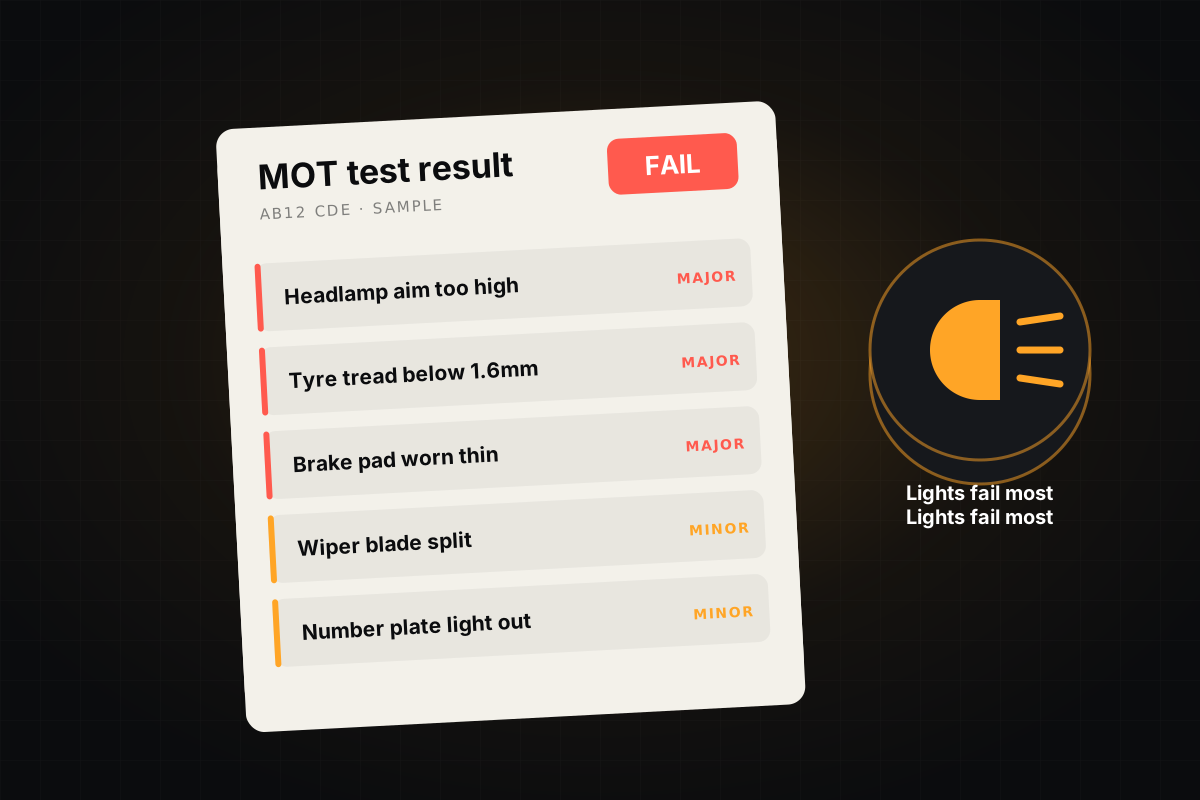
Lighting is behind more MOT failures than any other area, and it’s the easiest to check. Walk round with someone pressing the brake, indicators and lights. Don’t forget the number plate light and the third brake light.
- Every bulb works
- Number plate light
- No cracked lenses
- Warning lights off
- Tread above 1.6mm
- No cuts or bulges
- Brakes pull straight
- Handbrake holds
- Wipers clear the screen
- Washer fluid topped up
- No chips in your line of sight
- Plates clean and legal
Tyres
The legal minimum is 1.6mm of tread across the central three-quarters of the tyre. A 20p coin is a quick guide: if you can see its outer band when it’s pushed into the tread, the tyre is close to the limit. Look for cuts and bulges on the sidewalls too.
- 3mm or morePlenty left.
- 2–3mmGrip in the wet drops off.
- 1.6–2mmLegal, but replace soon.
- Under 1.6mmA fail, and up to £2,500 fine a tyre.
Brakes and suspension
Brakes that pull to one side, squeal or feel soft are worth having looked at before the test. Knocks over bumps can be worn suspension parts, which are common fails on older cars.
Visibility
Split wiper blades, an empty washer bottle and chips in the driver’s line of sight all fail. Wipers are cheap and quick to replace yourself.
Read the last MOT’s advisories
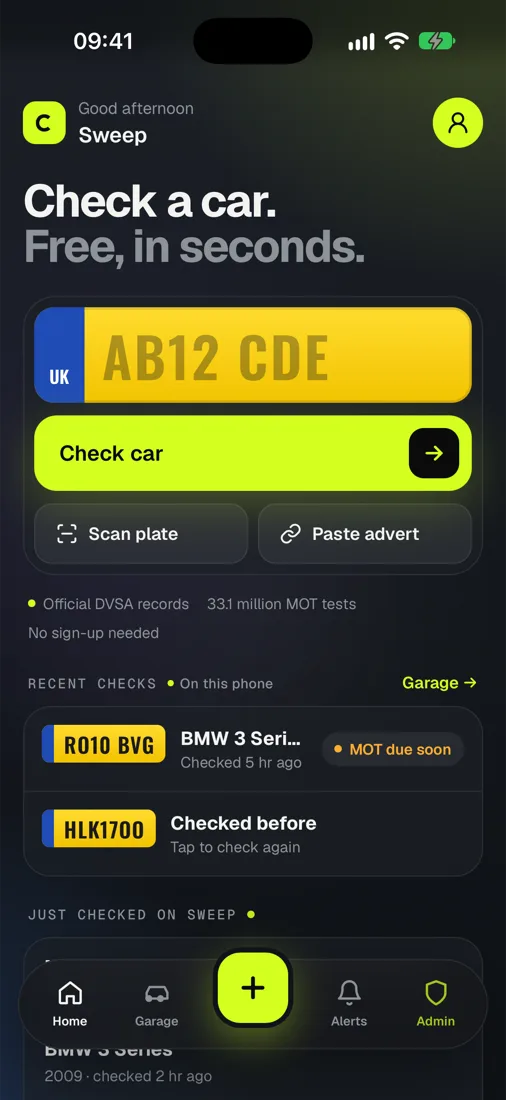
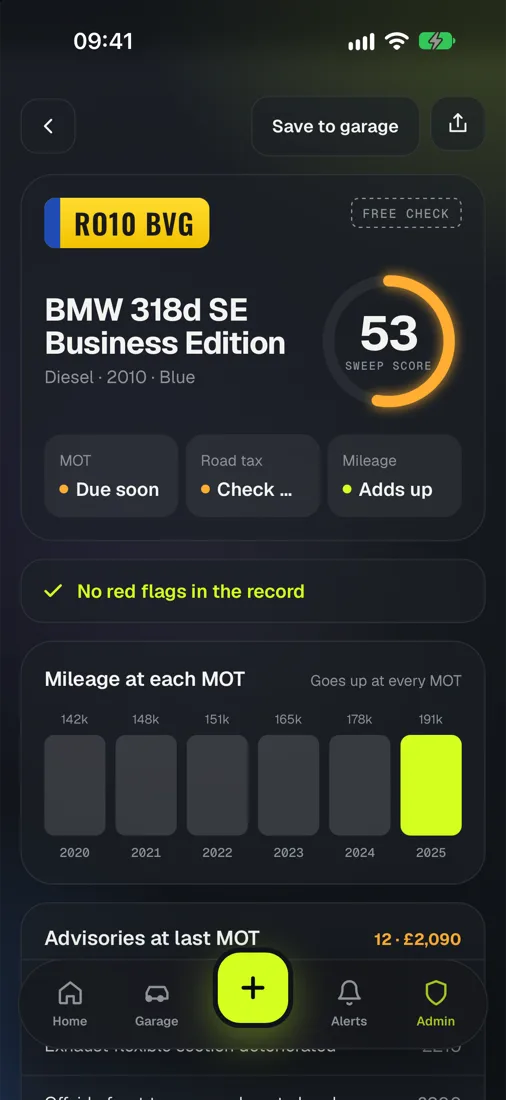
Advisories are the tester’s warning about what may fail next time. Look up the car’s last MOT for free on Sweep, and fix those items first.